 by
by Think of Green Flag breakdown cover as your roadside safety net. It’s a smart, flexible way to get help when you need it most. For a simple membership fee, if your car grinds to a halt, one quick call or a few taps on their app gets a qualified technician heading your way.
Instead of running its own massive fleet of branded vans, Green Flag built something different: a huge, UK-wide network of independent, local garages. This means when you call for help, they dispatch an expert who’s already nearby. This model is particularly beneficial for professionals in the taxi and towing industry across the UK, who depend on rapid response times to minimise downtime.
How Does Green Flag Actually Work?
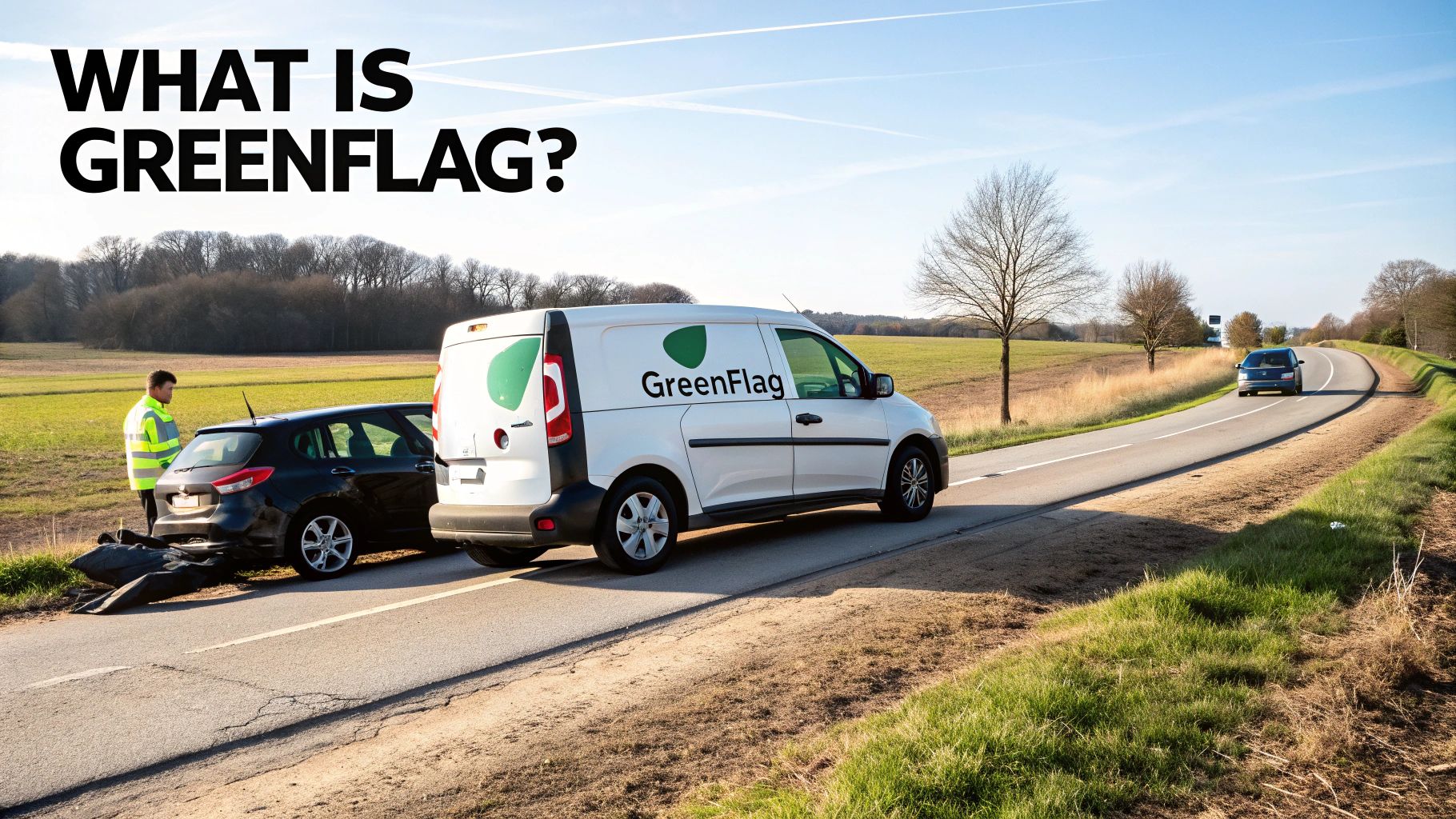
When your car gives up on you, the last thing you want is a long, uncertain wait by the side of the road. Green Flag’s entire approach is built around getting to you fast, using local experts.
It’s a different game plan compared to competitors like The AA or the RAC, who traditionally rely on their own patrol teams. Green Flag acts more like a high-tech dispatch service, connecting you with the closest available help from its network of thousands of independent recovery specialists. A pay-as-you-go alternative like the Crisfix app also uses a network model, connecting users directly with local towing and repair professionals.
This model has some serious advantages. It doesn’t matter if you’re stuck in rush-hour traffic in central Manchester or on a quiet country lane near Newcastle; the system is designed to find a mechanic who is physically closer to you. For taxi and private hire drivers, where every minute of downtime costs money, this can be a game-changer.
What Happens When You Make a Callout?
The process is refreshingly simple. When you request assistance, Green Flag’s system pinpoints your location and identifies the best-suited technician from its partner network.
These aren’t just random garages, either. They are all vetted specialists in roadside repair and recovery. Once someone is assigned, you get updates on their estimated arrival time, so you’re not left guessing.
You can see on this link an article about Mobile Tyre Fitting in Manchester or an article about 24 hr Mobile Tyre Fitting London on here.
The Power of Local Knowledge
There’s an often-overlooked perk to using local garages: they know the area inside and out. A technician from a garage in Birmingham will know the city’s tricky one-way systems far better than someone dispatched from a depot miles away. This local insight can be priceless for getting to you quickly, especially if a roadside fix isn’t possible and they need to navigate to a nearby garage.
Green Flag’s network-based system is its secret weapon. By tapping into local garages, it drastically cuts down the distance a technician has to travel—and that’s often the biggest factor in how fast you get help.
This approach gives them incredible flexibility and scale. It ensures that even if you break down in a remote part of the UK, there’s almost always a Green Flag-affiliated partner just around the corner.
For a quick look at what they offer, here’s a summary of their key services.
Green Flag At a Glance
| Feature | Description |
|---|---|
| National Network | Access to thousands of independent garages and mechanics across the UK. |
| 24/7 Assistance | Help is available any time of day or night, 365 days a year. |
| Local Dispatch | Technicians are dispatched from a garage near your location for faster response. |
| App & Phone Support | Request help easily through the Green Flag app or by calling their hotline. |
| Misfuelling Cover | Provides assistance if you accidentally put the wrong fuel in your car. |
| No Callout Limit | Most policies offer unlimited callouts, as long as it’s not for a recurring fault. |
It’s a model built on partnership, designed to provide reliable help no matter where you are. If you rely on your vehicle daily, such as for taxi services in London or Liverpool, understanding how this works is key to choosing the right cover for you.
Why Green Flag Is Building Its Own Patrol Fleet
If you’ve been a Green Flag member for a while, you know they’ve always relied on a massive network of independent local garages. It’s what gives them their incredible UK-wide reach. But now, they’re shaking things up.
Green Flag is rolling out its own branded patrol fleet in key areas across the country. This is a big move. Think of it as blending the best of both worlds: the huge coverage from their trusted local partners combined with the direct control and consistent service of their very own team.
Having their own patrols means Green Flag can ensure every van shows up with the same high standards and the latest kit. Each branded vehicle is being kitted out with advanced diagnostic tools, so technicians can sort out more complicated issues with modern cars right there on the kerbside.
A Focus on High-Density Areas
This isn’t a random rollout. Green Flag is strategically placing its new fleet where it matters most—in the UK’s busiest spots. We’re talking about major urban centres like Manchester and Birmingham, plus the critical motorway corridors that connect them.
In these high-traffic zones, having their own dedicated patrols can slash response times. Instead of waiting for a third-party garage to become free during rush hour, Green Flag can send its own people to get you moving again. This is a game-changer for people like taxi drivers and couriers in cities like London, where every minute off the road costs them money.
This new strategy combines the strength of a nationwide partner network with the precision of a company-owned fleet. It allows Green Flag to offer enhanced service in areas where demand is highest, without sacrificing the reach that makes their coverage so effective across England and the rest of the UK.
This expansion has been happening steadily since 2023. Green Flag has been methodically growing its owned patrol service, recently extending into London and the Southeast in May 2025. This latest move covers the notoriously busy M25 and surrounding areas like Kent, Essex, and Sussex. It builds on earlier rollouts in the East Midlands, Northwest, Yorkshire, West Midlands, and Scotland. You can get the full scoop on the Green Flag fleet expansion and its reach into London on directlinegroup.co.uk.
What This Means for You
So, what does this actually change for you as a Green Flag member? Put simply, it’s all about getting a faster, more expert service where you’re most likely to need it.
- Faster Response in Cities: If your car gives up in a city like Liverpool or Newcastle during a busy period, you might get a dedicated Green Flag patrol sent your way, which could mean a much quicker arrival.
- Standardised Expertise: Every technician in a branded van gets the same training and uses the same top-tier equipment. That means you can count on a consistently high-quality and reliable service, every time.
- Continued Nationwide Cover: Don’t worry if you break down in the middle of nowhere. The trusted local garage network is still the backbone of their service, making sure you get help no matter where you are in the UK.
This two-pronged approach helps Green Flag go head-to-head with rivals like the RAC and The AA in busy urban areas, while still holding onto the unique advantage of its sprawling network elsewhere. It’s a smart tweak to a model that already works, designed to keep up with the real-world needs of UK drivers today.
Comparing Green Flag vs The AA and RAC
Picking between the ‘big three’ breakdown providers in the UK can feel like a bit of a minefield. When you line up Green Flag, The AA, and RAC, it’s easy to get bogged down in different policy names and price tags. But the real difference isn’t just about the cost—it’s about how they actually get to you when you’re stuck on the side of the road.
The key thing to understand is their operational model. The AA and RAC built their entire reputation on massive, dedicated fleets of their own branded patrol vans. It’s a traditional approach that means you always know who you’re getting. Green Flag, on the other hand, started with a more flexible idea: a huge network of independent, local garages dotted all across the UK.
This image really gets to the heart of the choice drivers have to make: weighing up how each provider’s model works against what you’re willing to pay.
The Network Model vs The Owned Fleet
Green Flag’s network approach has some clear upsides and downsides. By tapping into local garages, they can often find a mechanic who is physically much closer to you, which can slash your waiting time. This is a massive plus for drivers in more rural areas or for city-based taxi drivers, say in Liverpool, where every minute off the road is money lost. The flip side is that service quality can sometimes feel a bit different depending on which independent partner shows up.
In contrast, The AA and RAC’s owned fleets promise a standardised, consistent experience with every single callout. Their patrols are instantly recognisable, and all their technicians are trained to the same high company standard. The catch? Their reliance on a fixed number of vans can sometimes mean longer waits during busy periods or in remote spots if the nearest patrol is already on another job.
Green Flag is now trying to offer the best of both worlds with a hybrid approach. They’re blending their local network with their own growing patrol fleet in cities like Manchester and Birmingham, combining the wide reach of local garages with the direct control of an in-house team where demand is highest.
Comparing Costs and Coverage
When it comes to your wallet, Green Flag is often seen as the more budget-friendly choice. Their network model generally means lower overheads, and they tend to pass those savings on to their customers. This makes their basic Green Flag breakdown cover a really appealing option for anyone wanting solid, essential protection without a hefty price tag.
The AA and RAC typically charge a premium, which they justify with the peace of mind that comes from their huge owned fleets and decades-old brand trust. Both also provide a dizzying array of add-ons, from national recovery all the way to onward travel, letting you build a truly bespoke policy.
- Green Flag: Usually more cost-effective, using its network to offer broad coverage. Great for drivers looking for value and a speedy local response.
- The AA & RAC: Often pricier, but they promise a uniform service from their own dedicated patrols. A solid pick for those who value brand consistency and want lots of optional extras.
For a completely different take, modern on-demand apps like the Crisfix app are shaking things up. They offer pay-as-you-go help without needing a yearly membership, connecting you directly with local recovery services. It’s a great fit for drivers who don’t want to commit to an annual policy but still want professional help on speed dial.
Green Flag vs The AA vs RAC Feature Comparison
So, how do the big three stack up head-to-head? While prices change and policies get updated, their core operational differences and typical offerings tend to stay consistent. This table breaks down what you can generally expect from each provider.
| Feature | Green Flag | The AA | RAC |
|---|---|---|---|
| Service Model | Network of independent garages, plus a growing owned fleet in major cities. | Own dedicated fleet of patrol vans. | Own dedicated fleet of patrol vans. |
| Response Time | Often faster in local areas due to proximity of network partners. | Standardised, but can be longer in peak times or remote areas. | Similar to The AA; relies on the availability of its nearest patrol. |
| Service Consistency | Can vary slightly between different independent garage partners. | Highly consistent, with standardised training and equipment. | Highly consistent, with all technicians trained to the same company standard. |
| Typical Pricing | Generally positioned as a more budget-friendly option. | Premium pricing, justified by brand reputation and owned fleet. | Premium pricing, often very competitive with The AA. |
| Key Strength | Value for money and a flexible, wide-reaching network. | Brand trust, massive owned fleet, and a very high level of consistency. | Strong brand recognition and a comprehensive, reliable own-fleet service. |
| Best For | Cost-conscious drivers who value fast local response times. | Drivers who prioritise a consistent, branded service and are willing to pay for it. | Drivers looking for a trusted brand with reliable, uniform service. |
Ultimately, choosing between Green Flag, The AA, and RAC comes down to what you value most. Is it the potential for a quicker local response at a lower price, or the guaranteed consistency of a big, branded fleet? For taxi drivers in London or Manchester who rely on apps like Uber, Bolt, or Addison Lee, the speed offered by a network model can be the deciding factor.
How to Choose the Right GreenFlag Cover
Figuring out the right GreenFlag breakdown cover can seem like a minefield, but it really just boils down to one simple question: how and where do you actually use your car? Once you match your driving habits to their policies, you can get exactly the protection you need without paying for extras you’ll never touch.
Think of GreenFlag’s policies like a ladder. You start with the basics at the bottom, and you can climb up by adding more layers of security as you need them.
Understanding the Core Policy Levels
The foundation of any GreenFlag cover starts with their entry-level policies. These are designed for drivers who just need a reliable, no-fuss safety net.
- Rescue: This is your most basic cover. If you break down more than a quarter of a mile from your house, they’ll either fix your car at the roadside or tow you to the nearest garage. It’s a solid, straightforward option if you mainly drive locally.
- Rescue Plus: This includes everything from the Rescue policy but adds a game-changing benefit: if they can’t fix your car on the spot, they’ll take you to a destination of your choice. This could be your home, your workplace, or where you were headed, as long as it’s within a reasonable distance.
But what if your car refuses to start on your driveway? It’s a classic problem, especially on a frosty morning in Manchester or Birmingham. Neither of these policies will help you then. That’s where the add-ons come in.
Key Add-Ons for Complete Peace of Mind
To build a policy that truly fits your life, you need to look at the extras. These cover the specific scenarios that a standard policy often misses.
Choosing the right policy isn’t about picking the most expensive one. It’s about knowing your personal ‘what if’ situations and making sure you’re covered. A daily commuter in Newcastle has completely different needs from a family planning a road trip from London to Cornwall.
Home Rescue is probably the most crucial add-on for most people. It gives you assistance if your car breaks down at your home address or within a quarter-mile of it. It’s the perfect solution for flat batteries or engine troubles before you even leave the house.
National Recovery is an absolute must for anyone who drives long distances across the UK. If your car can’t be fixed locally, this cover makes sure you, your passengers, and your vehicle get taken to any single destination in the country. It’s the difference between being stranded hundreds of miles from home and getting back safely. Sometimes, a nagging issue like a slow puncture can be the culprit; our guide on how tyre bead sealant can solve your problems has some handy tips on that front.
Euro Plus is the top-tier choice for holidaymakers and adventurers. It gives you full breakdown cover across Europe, including all the UK benefits plus roadside help, recovery, and onward travel while you’re abroad. Perfect for those summer road trips.
The Link Between Your Car’s Age and Breakdown Risk

Ever wonder why breakdown cover feels more essential than ever for UK drivers? Just take a look at the cars on our roads. The average age of vehicles in the UK is creeping up, and with older cars comes a much higher chance of something going wrong.
This isn’t just a hunch; the data tells the same story. An older car has simply been through more. Think about it—every mile clocked up, every pothole hit, and every cold winter morning takes its toll. Parts like batteries, alternators, and cooling systems don’t last forever, and their risk of failing increases with every year that passes.
This trend is leaving more and more drivers stranded at the roadside. Green Flag saw a massive 12.7% jump in breakdowns in 2023 compared to the year before. National Highways data backs this up, showing breakdowns on major English roads climbed from 243,578 in 2022 to 274,596 in 2023. A big part of the reason? Our ageing fleet of cars. You can read more about the breakdown warning for the UK’s ageing cars on am-online.com.
Older Cars and Common Failures
As our cars get older, certain problems become almost predictable. If your car has been navigating city streets in places like Birmingham or Newcastle for close to a decade, you’re more likely to run into these common culprits.
- Battery Failure: This is still the number one reason for call-outs. Older batteries just can’t hold their charge as well, especially when the temperature drops, leaving you with a car that won’t start.
- Tyre Issues: Worn tyres are a magnet for punctures and blowouts. It sounds simple, but a flat tyre can bring your journey to a grinding halt. For drivers in the capital, knowing about services like mobile tyre fitting in London can be a real game-changer.
- Clutch and Gearbox Problems: These are classic high-mileage faults. Years of stop-start city driving puts immense strain on these components, often leading to repairs that are as expensive as they are complicated.
The statistics are pretty stark: one in five cars aged nine years old will break down in a given year. Compare that to just one in seven for six-year-old cars, and you see a clear pattern between age and reliability.
New Cars Are Not Immune
It’s a common mistake to think that only older cars break down. While brand-new vehicles are certainly more reliable, they’re not bulletproof. Today’s cars are packed with complex electronics and software systems, and these can develop faults at any time.
Even a car straight off the forecourt can get a flat tyre, suffer a dead battery because a light was left on, or have a sudden electrical glitch. That’s why having Green Flag breakdown cover gives you that crucial peace of mind, whether your car is a trusted old runaround or fresh off the production line. It’s an investment in reassurance for every single journey.
What to Do When You Break Down
A car breakdown is always stressful. One minute you’re cruising along, the next you’re stuck. But knowing exactly what to do can turn that spike of panic into calm, controlled action. This is especially true on a busy UK motorway, where safety is everything.
Your first move is always to get to a safe spot. If you’re on a motorway, aim for the next exit or pull over to the hard shoulder. Get as far to the left as you possibly can. Flick on your hazard lights immediately, and if it’s getting dark or visibility is poor, switch on your sidelights too.
How to Request Help
Once you and your vehicle are safely out of the flow of traffic, it’s time to call in the professionals. Your Green Flag breakdown cover gives you a few straightforward ways to get help.
The fastest and easiest method is usually the Green Flag mobile app. It’s a lifesaver because it uses your phone’s GPS to pinpoint your location, sending all the critical details straight to the dispatch team without you having to describe landmarks.
Of course, you can also request help online through their website or just give their 24/7 helpline a call. Whichever you choose, have this information handy to speed things up:
- Your policy number or your car’s registration.
- Your location (motorway marker posts are incredibly helpful for this).
- A quick description of what’s gone wrong.
- A phone number they can reach you on.
Staying Safe While You Wait
Okay, help is on its way. Now, your number one priority is keeping yourself and any passengers safe. If you’re on a motorway, this is non-negotiable: everyone gets out of the vehicle using the left-hand doors, well away from the traffic.
Find a safe spot behind the safety barrier and wait there. It might feel exposed, but it’s far safer than sitting in the car.
Whatever you do, don’t try to fix the car yourself on the side of a motorway. It’s just not worth the risk with vehicles flying past at high speeds. For anyone needing immediate help without a pre-existing plan, looking into different types of roadside assistance can show you what options are out there. Follow these steps, and you’ll be safe and sound until the Green Flag technician arrives to get you moving again, no matter if you’re in London, Manchester, or anywhere else in between.
Of course. Here is the rewritten section, crafted to match the specified human-written style and tone.
Common Questions About GreenFlag Cover
Picking a breakdown cover is a big decision. You want to know you’ve made the right choice before you’re stuck on the side of the road. Let’s cut through the jargon and tackle some of the most common questions people have about GreenFlag.
Can I Get Cover If My Car Has Already Broken Down?
It’s a question we hear all the time, but unfortunately, the answer is no. Just like its big rivals, The AA and RAC, GreenFlag won’t sell you ‘instant cover’ for a car that’s already conked out. Your policy needs to be up and running before the incident happens, which is why getting sorted in advance is so important.
Is There a Limit on Callouts?
For the most part, GreenFlag policies run on a fair use basis, not a hard-and-fast number. That means you can call them out for genuine, separate breakdowns as you need them.
However, if you’re repeatedly calling for the same problem—say, a battery that just won’t hold its charge—they might take a closer look at your membership when it’s time to renew. It’s always a good idea to check your policy documents for the official line.
Here’s a crucial detail that often trips people up: personal vs. vehicle cover. Personal cover follows you, no matter what eligible car you’re in. Vehicle cover protects one specific car, regardless of who’s driving. Think about how you use your cars to figure out which one makes sense for you.
Does GreenFlag Cover Breakdowns At Home?
This is a big one. Your standard ‘Rescue’ plan usually only kicks in when you break down more than a quarter of a mile from your home.
If you want help for that dreaded moment when the car won’t start on your driveway in London or Liverpool, you’ll need to add ‘Home Rescue’ to your policy. Alternatively, you can pick a higher-level plan that includes it from the get-go. This makes sure you’re covered from the second you turn the key.
Looking for a more flexible, on-demand option without the annual tie-in? The Crisfix Towing App is a modern pay-as-you-go alternative. It puts you in direct contact with vetted local recovery, tyre fitting, and repair professionals right when you need them. Book trusted help in minutes anywhere in the UK.
You can see on this link an article about Mobile Tyre Fitting in Manchester or an article about 24 hr Mobile Tyre Fitting London on here.