by
by A flat battery is a common headache for any UK driver, whether you’re a private car owner in Manchester or a taxi professional in London navigating the daily grind. It doesn’t have to derail your schedule. Learning how to charge a car battery at home is a crucial skill that saves you time, money, and the stress of being stranded.
This guide provides the decisive information you need to either handle the charge yourself or make the smart call for professional help. We’ll cover both standard 12V batteries and the specifics for EV drivers, including taxi and towing operators.
Your Guide to Home Car Battery Charging

Before you reach for a charger, the first step is making a decision. Is a DIY charge the right move, or is it time to call in a professional service like The AA or get rapid assistance via the CrisFix app? For a professional driver, downtime is lost income, so making the correct choice instantly is critical.
Knowing when to act yourself versus when to seek expert help is the key to getting back on the road efficiently and safely.
The Rise of Home Charging in the UK
Home vehicle charging has become standard practice across the UK, a trend accelerated by the electric vehicle boom. For EV drivers, this typically involves using a dedicated wallbox charger connected to a standard 230V domestic supply.
The scale of this shift is significant. As of early 2025, there are around 700,000 private electric charging locations in the UK, predominantly at homes or workplaces. This infrastructure supports a large portion of the 1.3 million EV owners on roads in England, from Liverpool to Newcastle. A standard 7kW home wallbox can fully charge an EV in about 6-8 hours, making overnight charging the most efficient strategy. You can explore more UK EV statistics over on heycar.com.
DIY Charge or Call for Help? A Decision Guide for UK Drivers
Should you handle it yourself or call for professional assistance? Your location, confidence, and urgency will dictate the best course of action. Whether you’re in a residential street in Birmingham or a busy depot in London, this guide helps you decide, not just explain.
| Competitor/Service | Pros | Cons | The Decisive Choice |
|---|---|---|---|
| DIY Charge | No cost, immediate start (if you have the kit). | Risk of incorrect procedure damaging car electronics. Slower than a professional boost. | Best for non-urgent situations in a safe, ventilated home garage or driveway when you are confident and have the right smart charger. |
| RAC / The AA / Green Flag | Trusted brand names, national coverage. Professional and safe. | Can involve long wait times, especially during peak hours. Membership costs can be high. | Good for existing members who aren’t in a major hurry and prefer a familiar service. |
| CrisFix app | On-demand, fast response from local vetted professionals. Transparent, upfront pricing. No membership needed. | Requires a smartphone and app download. | The best option for urgent situations. Ideal for taxi drivers, delivery vans, or anyone who needs to get moving now and values speed and efficiency over brand loyalty. |
If you are ever in doubt, or if a charged battery still fails to start the car, calling for help is the only logical decision. It’s better to pay for a professional who can diagnose a deeper issue (like a failed alternator) than to risk further damage or delays.
Getting Set Up for a Safe Charge
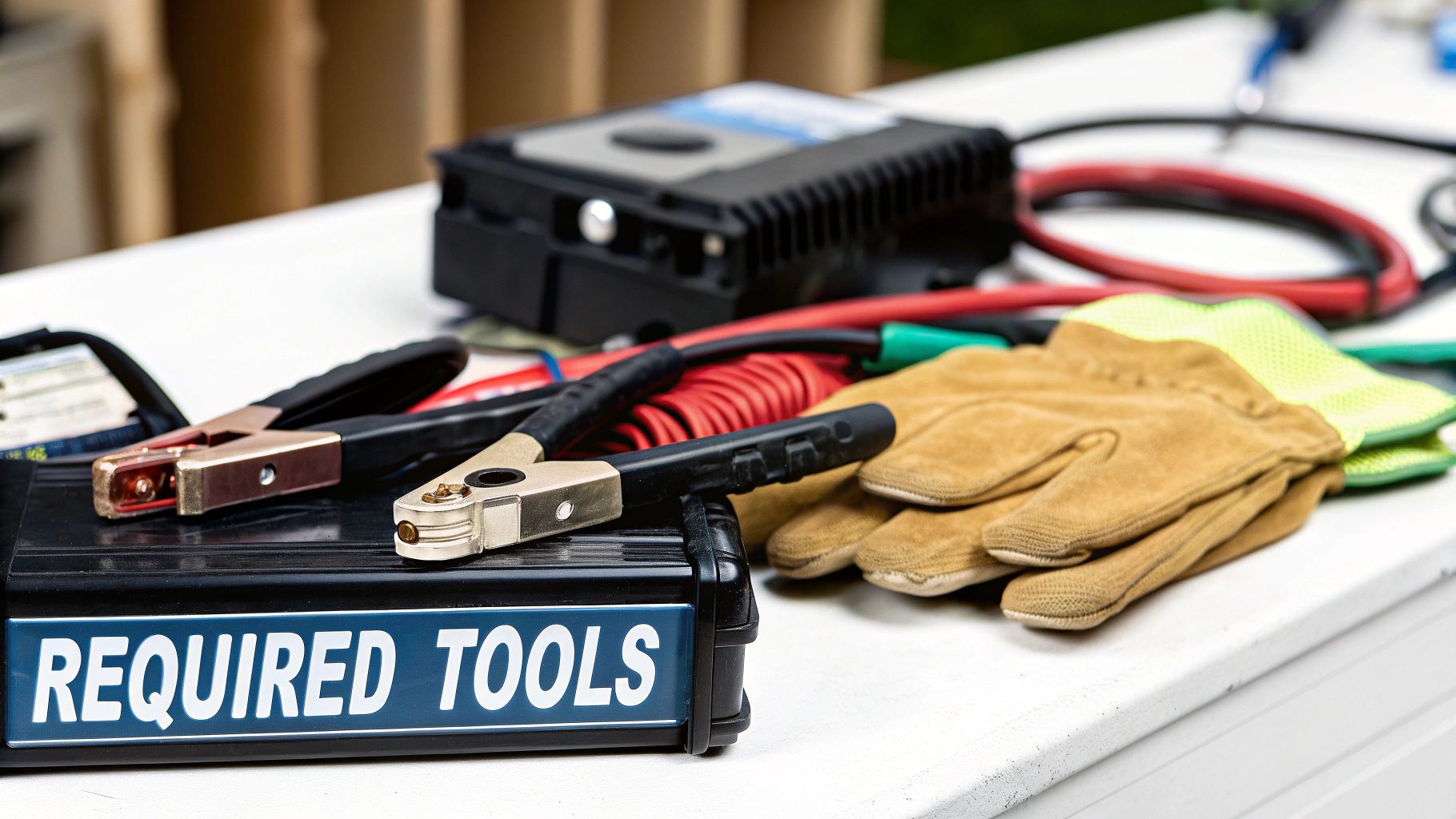
Before connecting any equipment, preparation is mandatory. This isn’t about ticking boxes; it’s about protecting you, your vehicle, and its sensitive electronics from expensive damage. Get this right, and you can proceed with confidence.
First, select the right location. Whether you have a terraced house in Liverpool or a depot in Birmingham, the area must be well-ventilated. Car batteries can emit flammable hydrogen gas during charging. An open garage, a clear driveway, or a well-aired workshop is essential. A sealed, enclosed space is a major safety hazard.
Next, equip your personal protective equipment (PPE). This is non-negotiable.
- Safety Goggles: To protect your eyes from potential acid splashes or sparks.
- Acid-Resistant Gloves: To shield your hands from corrosive fluid and prevent electrical shocks.
Choosing Your Charger and Checking Your Battery
Not all chargers are the same. Your best choice is a modern smart charger. It intelligently adjusts the charging rate and shuts off automatically when the battery is full, preventing overcharging and damage. These are suitable for the most common battery types, including lead-acid and AGM, found in the majority of UK cars and light commercial vehicles.
For electric vehicle (EV) operators, the process is entirely different, utilising dedicated wallboxes or manufacturer-provided cables designed for high-capacity lithium-ion batteries.
Before connecting anything, identify your terminals.
Key Takeaway: The positive terminal is marked with a plus sign (+) and usually has a red cover. The negative terminal has a minus sign (-) and a black cover. Reversing these connections will cause serious electrical damage.
Finally, check the vehicle’s manual. Newer vehicles, especially those with complex engine management systems, may have specific charging protocols, such as requiring the battery to be disconnected first. Ignoring this step could damage the vehicle’s ECU, turning a simple task into a costly repair.
The Standard Car Battery Charging Process
Let’s get practical with a standard 12V car battery. Understanding the why behind each step is crucial for a successful and safe outcome.
Imagine your taxi has been idle for a few days on the drive, and it won’t start. A flat battery is an operational problem, but knowing how to charge it correctly turns a potential loss of earnings into a manageable task.
Connecting Your Charger The Right Way
First, ensure the charger is unplugged from the mains. Connect the positive (red) clamp securely to the positive (+) terminal on the battery.
Next, and this is the critical part, connect the negative (black) clamp to a solid, unpainted metal part of the car’s chassis or engine block—not the battery’s negative terminal. This is called grounding. It safely directs any potential sparks away from the battery, where flammable hydrogen gas might be present.
Only after both clamps are securely connected should you plug the charger into the wall socket and switch it on.
The image below demonstrates the correct procedure.
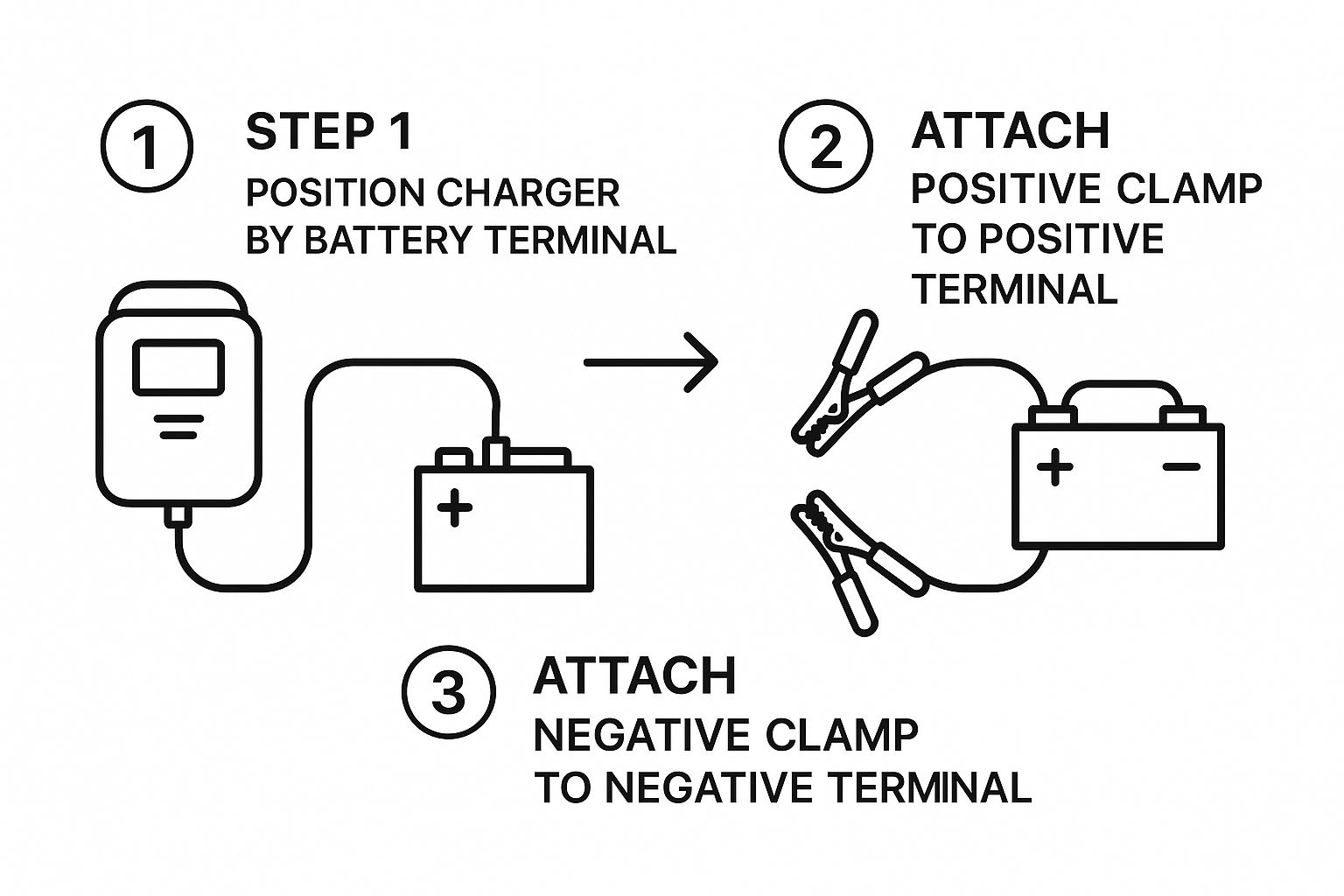
Following this sequence is a non-negotiable safety protocol.
Manual vs Smart Chargers
Your charger type dictates your involvement. A basic manual charger requires you to set the amperage. A low “trickle” charge setting, around 2-4 amps, is healthier for the battery than a fast, high-amp charge. You must also monitor it and unplug it manually to prevent overcharging.
A modern ‘smart’ charger is the superior choice. It analyses the battery’s condition and automates the entire process.
A smart charger provides the optimal current and, critically, switches to a ‘maintenance’ or ‘float’ mode once the battery is full. This prevents overcharging and damage, making it the definitive set-and-forget solution for professionals and home users alike.
If the battery is completely unresponsive to charging, another solution may be needed. Our detailed guide on how to jump start battery provides instructions for that scenario.
Charging Your Electric Vehicle at Home
For the growing number of UK drivers and professional fleets in cities like London and Manchester, charging an electric vehicle is a daily routine. This process is fundamentally different from boosting a 12V battery; it involves safely connecting your vehicle to your property’s electrical grid. The method you choose directly impacts convenience, cost, and your battery’s lifespan.
The most basic method is a standard 3-pin ‘granny charger’. While it requires no special installation, it is extremely slow, potentially taking over 24 hours for a full charge. For any regular user, and especially for a commercial operator, a dedicated wallbox is the only practical solution, dramatically reducing charging time.
Wallbox Chargers vs 3-Pin Plugs
For most EV owners in the UK, a dedicated wallbox is the default choice. These units, typically delivering 3.6kW or 7kW, can fully charge an average EV overnight. For a reliable and safe Level 2 charging setup, using professional EV charger installation services is the recommended course of action for performance and compliance.
While public chargers are becoming more visible, home charging remains dominant. As of early 2025, the UK has approximately 76,840 public charging points. This is dwarfed by the estimated 700,000 private chargers at homes and workplaces. You can see more data on the growth of the UK’s charging network at zap-map.com.
This data confirms that the vast majority of EV drivers, including ride-sharing professionals using platforms like Uber, Bolt, or Addison Lee, depend on overnight home charging. Slower home charging rates (3-7kW) are also better for battery health. Research indicates that frequent use of high-power rapid chargers can degrade an EV battery’s lifespan by as much as 40%.
Financial Decision Point: The primary advantage of home charging is cost. By pairing a smart charger with a time-of-use electricity tariff (like Octopus Go), you can schedule charging for off-peak hours when electricity is cheapest. This simple action makes running an EV in Newcastle or Birmingham significantly cheaper than fueling a petrol or diesel vehicle, directly impacting a professional driver’s profit margin.
Furthermore, the apps accompanying smart chargers provide data to monitor charging costs and battery health, ensuring your primary asset remains in optimal condition.
Keeping Your Battery Healthy for the Long Haul
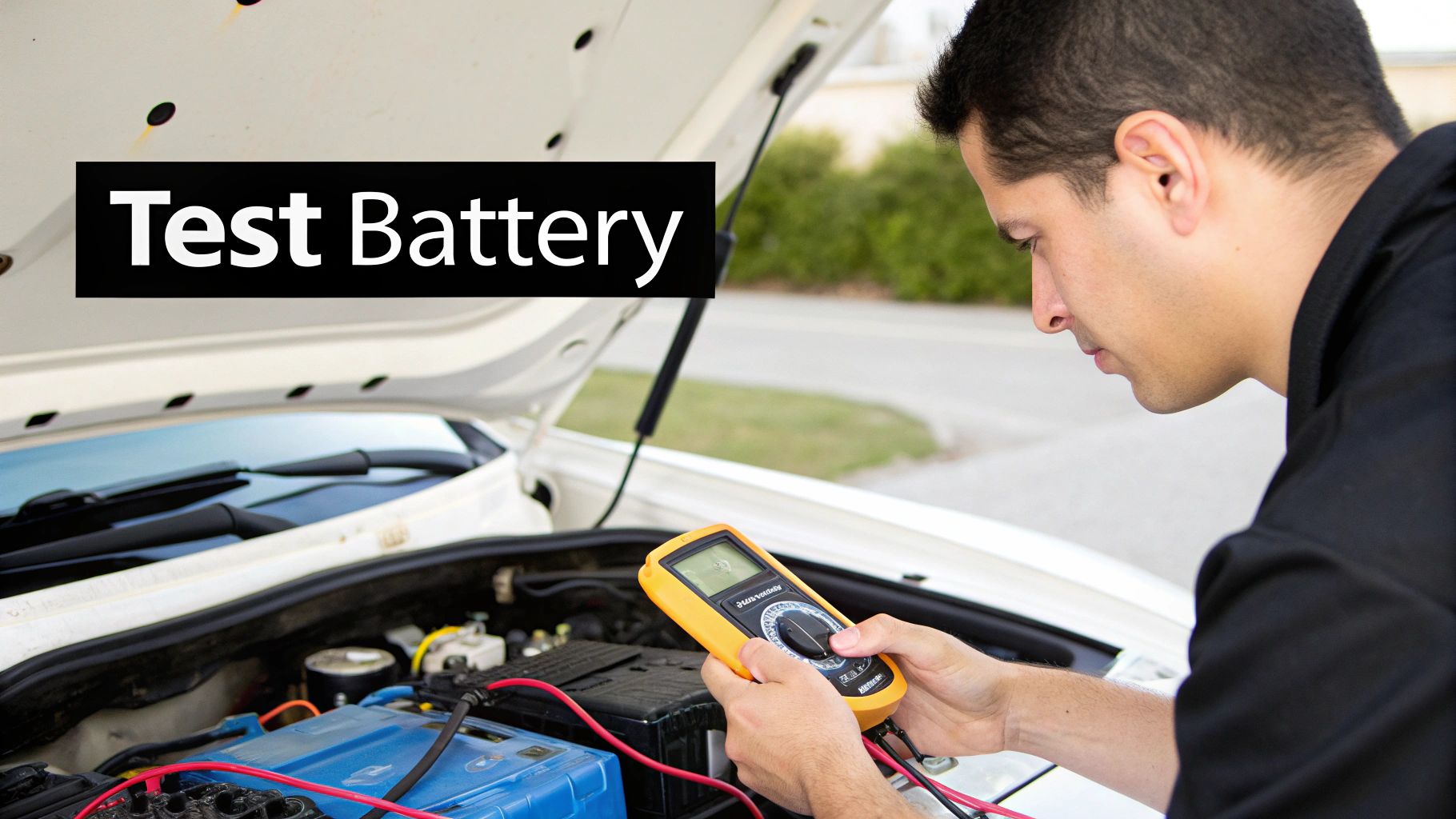
A successful charge gets you running today; smart maintenance keeps you running for years. Proactive battery care saves you from the operational disruption of being stranded in a place like Newcastle and the premature cost of a replacement battery.
For a standard 12V battery, the most crucial task is keeping the terminals clean. A build-up of white, crusty corrosion can impede the electrical connection, making a healthy battery appear dead. It’s also vital to avoid letting a standard lead-acid battery discharge completely, as each deep discharge cycle reduces its overall lifespan.
For EV drivers across the UK, long-term health is all about intelligent charging habits.
The 80/20 Rule for EV Batteries
If you operate an EV, the most effective strategy for preserving battery health is the 80/20 rule.
For daily use, whether driving privately in Manchester or for a ride-sharing service like Free Now or Gett in London, aim to keep your state of charge between 20% and 80%.
Repeatedly charging to 100% or draining the battery to zero places significant stress on the lithium-ion cells, accelerating their degradation. Adhering to the 80/20 window is a simple, effective method to protect your investment. Modern smart chargers and vehicle software make this easy to automate.
This isn’t just about battery longevity; it’s a financial decision. Home charging can cost as little as 7.5p/kWh on an off-peak tariff, a stark contrast to expensive public rapid-charging stations.
The impact is substantial. A well-maintained EV battery can retain up to 85% of its original capacity after eight years. A poorly managed one could be down to just 60%, severely affecting range and resale value.
If you have concerns about your battery’s health or find yourself stranded, professional help is the best option. Our guide to roadside assistance can connect you with the support you need.
Common Questions on Home Car Battery Charging
You have the procedure, but some questions may remain. Here are the most common queries from drivers across the UK, answered directly to help you make the right call.
How Long Does It Take to Fully Charge a Car Battery at Home?
This depends entirely on the charger and battery size. For a standard 12V car battery using a 4-6 amp home charger, a full charge will take approximately 8-12 hours.
For an electric vehicle (EV), a dedicated 7kW home wallbox in London or Manchester will provide a full charge in 6-8 hours. Using a basic 3-pin ‘granny’ charger is a last resort; expect a wait time exceeding 24 hours.
Is It Safe to Leave a Battery Charging Overnight?
Yes, provided you are using a modern ‘smart’ or ‘automatic’ charger. These devices are designed to prevent overcharging by switching to a low-power maintenance mode once the battery is full.
Under no circumstances should you leave an old-style manual charger running unattended overnight. Always ensure the charging area is well-ventilated, for example, an open garage in your England home. Adhere strictly to the manufacturer’s instructions.
Can I Charge the Battery While It’s Still in the Car?
For most modern cars, yes, this is the standard and most convenient method, especially with a smart charger. However, it is always prudent to consult your vehicle’s manual, as some high-end models may have specific requirements.
The correct and safe procedure is to connect the positive (red) clamp to the battery’s positive terminal first. Then, connect the negative (black) clamp to a solid, unpainted metal point on the car’s chassis (an earth point), away from the battery. This protocol is essential to minimise the risk of sparks near the battery.
If the battery fails to hold a charge after several hours, or if you are ever unsure, the only correct decision is to call for professional help. A non-charging battery often indicates a failed alternator. In these situations, using a reliable car breakdown recovery service is the safest and most efficient solution.
When you need immediate, reliable help on the road, from a dead battery to a full breakdown, the Crisfix App connects you with vetted, local professionals in minutes. Download the app for transparent, on-demand service without the stress.