

 by
by Beat the hard shoulder: instant rescue on the M8
Stuck on the ring road at rush hour? The M8 Glasgow towing app gets a rescue to you without the usual phone queues and guesswork. It uses real-time location, vetted local operators, and weather-aware routing to shorten waits and reduce risk. In this guide, you’ll see how it works, what to expect during Glasgow ring road incidents, how weather affects response, and how real-time booking compares with AA/RAC and the Crisfix App.
> When minutes matter, cutting the time to accurate dispatch is the single biggest win for safety and stress.
How the M8 Glasgow towing app works
One-tap dispatch with precise location
– Your GPS pin and direction of travel are shared, reducing “which carriageway?” errors.
– `Geofencing` around junctions like J15–J19 flags the nearest safe rendezvous.
– Operators receive your vehicle type, issue, and safety notes before they roll.
Practical example: A driver breaks down near Charing Cross Viaduct. Instead of describing landmarks over the phone, the app sends exact coordinates, the lane count, and the nearest emergency refuge.
Live tracking and dynamic ETAs
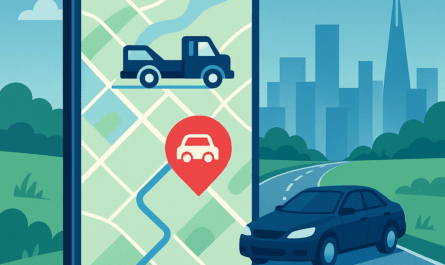
– Watch your truck on the map with ETAs that adjust to congestion or lane closures.
– If conditions change (e.g., contraflow near the Kingston Bridge), routing updates in-app.
– You can message the driver and submit photos for quicker triage.
Statistic to know: UK motorway breakdown ETAs typically run 30–45 minutes during peak periods, based on published service statements. Real-time routing can shave several minutes by avoiding blocked approaches.
Transparent pricing and scope
– See up-front costs for local tows, long-haul, EV flatbed requirements, or winch-outs.
– The app flags add-ons (after-hours surcharge, extra passengers, or trailer handling).
– No membership barrier: you pay per use with digital receipts for claims.
Best practice: Add your preferred destination (home, garage, or service area) during booking. It reduces back-and-forth and locks the quote.
Safety vetting and operator standards
– Drivers meet checks for licensing, insurance, and equipment (e.g., EV-friendly skates).
– Time-stamped job logs document arrival, hookup, and drop-off.
– In adverse weather, the app limits jobs to trucks with suitable gear (snow chains, VRS straps).
> Credible operators track every tow. Those time stamps protect you if disputes arise.
Navigate Glasgow ring road realities
Incident hotspots and pinch points
Expect recurring delays at:
– Charing Cross Viaduct and the Kingston Bridge complex
– Approaches to the M74/M77 merge points
– Junctions with narrow verges where there’s no hard shoulder
Transport Scotland notes frequent congestion and incident knock-ons in these areas. That means tow trucks often stage from alternative entrances to reach you faster.
Case study: A minor shunt westbound near J18 closes lane three. The app reroutes your assigned truck via Anderston to enter downstream, trimming a 20-minute delay to 7.
Lane closures, contraflows, and safe positioning
– If there’s no hard shoulder, use an emergency refuge or exit where possible.
– Stay behind barriers. Keep hazards on and angle wheels away from traffic.
– Share “which lane” details in-app; a quick photo helps operators choose approach gear.
Common mistake to avoid: Standing in front of your vehicle to flag help. Stay behind the barrier and use the app’s messaging instead.
Weather and the Glasgow microclimate
– Heavy rain and spray reduce visibility; trucks may slow or need extra approach distance.
– Winter ice on overbridges and ramps can double stopping distance.
– Strong westerlies funnel across the river crossings; light vehicles on flatbeds require extra securement.
Weather-aware routing taps Met Office and road sensor data to estimate safer ETAs. If conditions deteriorate, the app can switch operators with appropriate equipment without dropping your place in queue.
Data-driven dispatch decisions
– Peak breakdown times: weekday commutes and Saturday shopping windows.
– Average on-scene times increase during multi-vehicle incidents and concert traffic.
– EVs, low-clearance sports cars, and AWDs need specific kit; preselecting your vehicle avoids aborts.
Actionable tip: Save your vehicle profile (make, model, drivetrain, tyre size). It prevents wrong-truck dispatches that add 20–30 minutes.
Real-time booking vs AA/RAC and Crisfix
Response time and predictability
– Real-time apps emphasize local availability and GPS dispatch for predictable ETAs.
– National clubs (AA/RAC) provide wide-area coverage and prioritization tiers for vulnerable drivers.
– In city cores like Glasgow, on-demand networks often achieve shorter urban approach distances.
Balanced view: Membership schemes can excel on rural legs; the M8 Glasgow towing app can outperform inside the ring road due to dense partner coverage and live routing.
Cost model and transparency
– App model: pay per incident, visible quotes, no waiting on phone triage.
– Membership model: annual fee plus potential extras (relay distance, non-start vs tow, parts).
– Crisfix App: similar on-demand pricing; availability depends on its local partner density.
Mistake to avoid: Assuming all tows are equal. EVs, all-wheel-drive, and accident recoveries often require flatbeds, lifting dollies, or scene clearance—priced differently.
Coverage and service scope
– The M8 Glasgow towing app focuses on towing, jump-starts, tyre help, and short-haul recovery around the ring road.
– AA/RAC add roadside repair attempts, onward travel, and national relay.
– Crisfix may bundle light mechanical help, depending on the operator network in Glasgow.
Best practice: Choose the service model that fits the trip. For city commutes and known garage destinations, on-demand towing is efficient. For long touring, a membership’s relay can pay off.
How Crisfix App compares in real use
Case study: Two drivers break down near the Kingston Bridge.
– M8 Glasgow towing app: nearest flatbed 18 minutes, quote shown, EV-compatible.
– Crisfix App: next available 30 minutes due to network load, price similar.
– AA/RAC: triage by phone, patrol arrives in 40 minutes, attempts restart, then tows if needed.
Takeaway: Real-time booking wins on speed and certainty when you already know a tow is required. Membership shines when a quick fix could avoid towing altogether.
For a deeper analysis, see our roadside assistance comparison checklist and this Glasgow M8 traffic survival guide.
Pro tips, checklists, and what to avoid
Before you request a tow
1) Move to a safe spot or emergency refuge if possible.
2) Turn hazards on; wear a high-vis vest; exit via the passenger side.
3) Add exact details in-app: lane, nearest junction, visible landmarks.
4) Upload photos showing tyre angle and bumper clearance.
During the wait
– Keep seatbelts on if you must remain inside; otherwise wait behind barriers.
– Share health needs (children, pets, medication) in the notes; operators can prioritize.
– Use the live map to plan your re-entry to traffic at a safer gap.
Special vehicles and scenarios
– EVs: request a flatbed; avoid towing with driven wheels on the road.
– Low-clearance cars: note lip spoilers; request extended ramps or skates.
– Vans/SUVs with AWD: require dollies or flatbeds; reduce drivetrain risk.
Tip: If you have locking wheel nuts or air suspension, note it. It can save a failed first attempt.
Avoid these common errors
– Dropping an inaccurate map pin or picking the wrong direction of travel.
– Calling multiple services at once, which can cause operator cancellations.
– Leaving valuables visible while you wait; secure items and lock doors.
> Clear, complete job notes are a force multiplier—faster dispatch, right equipment, smoother hookup.
Conclusion: safer, faster recoveries on the M8
Glasgow’s ring road is unforgiving in peak traffic and bad weather, but the M8 Glasgow towing app streamlines everything: accurate location, dynamic ETAs, and vetted operators who bring the right gear the first time. Whether you’re weighing real-time booking against AA/RAC or considering Crisfix, match the tool to the journey. Download the app, add your vehicle details, and save it to your home screen before you need it. The next time trouble strikes, will you place a call—or let the M8 Glasgow towing app do the heavy lifting in seconds?
FAQ
Q: How fast can I expect a truck on the M8?
A: Urban approach times often fall in the 20–40 minute range, depending on incidents and weather.
Q: Can the app handle EVs and AWD vehicles?
A: Yes. Select EV/AWD in your profile so dispatch sends a flatbed or dollies as required.
Q: What if I also have AA or RAC?
A: Use the option that fits the moment. If a quick fix is possible, membership helps. If a tow is certain, real-time booking is usually faster.
Q: Is pricing shown before I commit?
A: You’ll see an up-front quote with any surcharges flagged; your digital receipt is stored in the app.
Q: Will bad weather delay my rescue?
A: Severe rain, ice, or wind can extend ETAs, but weather-aware routing mitigates many delays by adjusting approaches.